The image shows a person holding a white dental model with a missing tooth, possibly demonstrating dental restoration techniques or equipment.

Dental Bridges

At the office of Lutz Dental, our team focuses on restoring missing teeth in ways that preserve function, facial form, and long-term oral health. Dental bridges remain a reliable, time-tested solution for many patients who want a fixed restoration that looks natural and returns everyday comfort. The sections below explain why timely tooth replacement matters, how modern bridges are designed and made, the main treatment options, and what you can expect from consultation through follow-up care.

Why replacing missing teeth preserves more than your smile

Leaving a gap where a tooth once sat can lead to a chain reaction in your mouth. Neighboring teeth tend to drift toward open spaces, which alters bite relationships and can create new areas that trap food and plaque. Over time these shifts can make routine hygiene more difficult and increase the risk of cavities and gum problems in previously healthy teeth.

Missing teeth also change the way your jaw handles biting forces. When a tooth is gone, nearby teeth often take on extra load; this imbalance can accelerate wear, cause tooth sensitivity, and produce muscle tension or jaw discomfort. Replacing teeth helps reestablish even force distribution across the dental arch, protecting the remaining natural teeth.

Beyond oral mechanics, tooth loss can subtly alter facial support. A single missing tooth might not be obvious at first, but multiple losses can contribute to loss of bone volume and a sunken appearance over time. A restoration such as a bridge helps restore normal contours and supports surrounding structures so your smile and profile remain balanced.

How contemporary bridges fit into modern care options

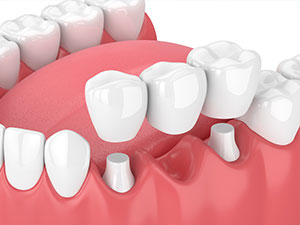
Dental bridges are a fixed prosthetic solution that span the space created by one or more missing teeth. They restore chewing ability and speech and remove the daily hassle of a removable appliance. Bridges are often chosen when patients want an option that is stable, relatively quick to complete, and integrated permanently into the mouth without nightly removal.

Today’s treatment planning considers your overall oral health, the condition of adjacent teeth, jawbone health, and aesthetic goals. For some people a bridge attached to natural teeth is the best choice; for others, placing implants to support the bridge provides a more conservative approach for the adjacent dentition and superior long-term stability. Your clinician will weigh these factors in a personalized recommendation.

Material advances mean bridges now provide both durability and a close match to natural teeth. Ceramic and zirconia options offer excellent strength and lifelike translucency, while metal-ceramic combinations remain a useful choice where extreme strength is required. The result is a restoration that not only functions well but also blends seamlessly with the smile.

Understanding bridge design: parts, materials, and longevity

A typical bridge consists of pontics (the replacement teeth) and abutments (the structures that anchor the bridge). In a traditional bridge, abutments are healthy teeth prepared to receive crowns that will support the pontic. In an implant-supported bridge, implants take the role of abutments, anchoring the restoration directly to the jawbone.

Material choice affects both appearance and performance. All-ceramic or zirconia bridges provide outstanding aesthetics and biocompatibility, while porcelain-fused-to-metal retains a proven track record where additional strength is needed. Modern digital workflows and lab techniques also improve fit, minimizing stress on surrounding teeth and reducing areas where plaque can accumulate.

With proper care—regular professional cleanings, consistent oral hygiene, and routine examinations—a well-made bridge can offer many years of reliable service. The condition of the supporting teeth or implants, how well the restoration fits, and how the patient cares for the area are key predictors of long-term success.

Deciding between a traditional fixed bridge and an implant-supported option

Choosing the right type of bridge begins with a thorough evaluation. A traditional fixed bridge is an excellent solution when adjacent teeth already need crowns or are strong enough to support the restoration without compromising long-term health. This method can be efficient and predictable for replacing one or several teeth in a row.

Implant-supported bridges are the preferred path when preserving adjacent natural teeth is a priority or when multiple missing teeth require a more robust, bone-preserving solution. Because implants replace tooth roots, they support the restoration while helping maintain the underlying jawbone and facial structure. Implant-supported bridges are particularly advantageous when several consecutive teeth are missing or when long-term preservation of bone is an important consideration.

There are clinical factors that influence candidacy for implants, including bone volume, general health, and habits such as smoking. When the jawbone requires augmentation before implant placement, staged treatment may be recommended to ensure a stable foundation. A careful diagnostic workup, often including digital imaging, helps clarify which route will best meet functional and aesthetic goals.

Ultimately, the goal is to match the treatment to your priorities—whether that means minimizing alteration of adjacent teeth, maximizing longevity, or balancing convenience and timing. Your dentist will outline the pros and cons of each approach and explain how each option aligns with your oral health and lifestyle.

What to expect from preparation through aftercare

Treatment for a traditional bridge usually involves preparing the supporting teeth for crowns, capturing precise impressions or digital scans, and placing a temporary restoration while the permanent bridge is fabricated. You can expect some short-term sensitivity and minor soreness as your mouth adjusts to the preparations, but most patients find these effects manageable and temporary.

When implants are part of the plan, the process includes careful surgical placement followed by a healing period while the implant integrates with the bone. This osseointegration phase can take several months. In many cases temporary teeth or provisional restorations are used so patients are not left without a functioning smile during healing.

Once a bridge is fitted, the final appointments focus on verifying the fit, bite, and aesthetics so your new restoration feels comfortable and natural. After placement, maintaining excellent oral hygiene is essential: brush carefully, clean between the abutments and pontics with floss or interdental tools, and attend regular dental checkups. These habits help the bridge and surrounding tissues remain healthy for years to come.

Should adjustments be necessary, your dental team will address them quickly to ensure proper function and comfort. Regular monitoring also lets the team spot potential issues early—such as wear, breakdown of adjacent tooth structure, or gum changes—so interventions can be conservative and effective.

To learn more about whether a dental bridge is the right solution for your missing teeth and to discuss personalized options, please contact us for more information. We’re happy to answer your questions and help you choose the most appropriate path to restore your smile.

Frequently Asked Questions

Will my smile feel any different?

+

Your new bridge is customized to the exact specifications of your smile. Before cementing to the underlying teeth or affixing it to the supporting implants, the shade, occlusion, and all aspects of its fit are carefully checked. In addition to being designed to blend seamlessly with your smile, it's also made to suit your bite and withstand all manner of oral function. We take great care to make sure your new restoration looks great, fits well, and that your bite feels comfortable.

Does dental insurance cover the cost of a bridge?

+

Replacing missing teeth with a dental bridge is a worthwhile investment in the look, health, and function of your smile. While many dental insurances offer coverage for a dental bridge, and some toward the cost of implants, the benefits and amounts can vary significantly from plan to plan. At the office of Lutz Dental, we understand the financial considerations involved in care and do all we can to help patients begin treatment without any additional stress or delay. In addition to doing our best to optimize your dental benefits, we also offer several payment and financing options. Feel free to contact our office if you have any questions on the cost of care, dental insurances, financing plans, or acceptable forms of payment.

What's the best way to care for my new bridge?

+

Now that your new permanent crown or bridge is in place, it's essential to maintain good oral hygiene. With proper care, your new restorations will last for years to come. Make sure to brush and floss as instructed. We'll show you how to floss under your dental bridge to keep your new smile clean and bright. Remember to make appointments for your routine checkups and professional cleanings.

How long can a bridge last?

+

The standard answer is that with routine dental visits and good home care, a bridge can last ten to fifteen years, and in many cases, much longer.

Why choose our office?

+

At the office of Lutz Dental, we fabricate your bridge from the highest quality dental materials to achieve the most cosmetically pleasing and lifelike results of care. It's also customized to the exact specifications of your smile and designed for optimal aesthetics, strength, and stability. Once fabricated and cemented into place, you'll feel confident sharing your smile, speaking, and eating your favorite foods.

As your trusted partner in care, we analyze every aspect of your smile to develop a treatment plan that provides aesthetically pleasing, healthy, and long-lasting results of care.

For more information on dental bridges, or any services we provide, give us a call today.

What are dental bridges and how do they work?

+

Dental bridges are fixed prosthetic restorations that replace one or more missing teeth by spanning the gap with artificial teeth called pontics supported by adjacent structures. Abutments that anchor a bridge can be prepared natural teeth or dental implants, depending on the chosen design and clinical needs. Bridges restore chewing function, help maintain speech patterns, and provide a stable alternative to removable options.

Traditional bridges rely on crowns placed on prepared neighboring teeth to support the pontic, while implant-supported bridges attach directly to implants that act as prosthetic roots. The choice of support affects how the bridge transfers biting forces to the jaw and adjacent teeth. Proper design and fit are essential to prevent food traps and to distribute forces evenly across the dental arch.

Why is it important to replace a missing tooth with a bridge or other restoration?

+

Replacing a missing tooth prevents neighboring teeth from drifting into the empty space, which can alter bite relationships and create areas that trap food and plaque. Left untreated, these changes make oral hygiene more difficult and increase the risk of cavities and gum disease in previously healthy teeth. Restoring the gap helps preserve normal chewing function and reduces uneven wear on remaining teeth.

Tooth loss also affects how biting forces are distributed, which can lead to overload on adjacent teeth, sensitivity, and jaw discomfort when imbalance occurs. Over time, missing teeth can contribute to loss of bone volume and changes in facial support that affect profile and smile aesthetics. A well-designed restoration helps maintain facial contours and supports long-term oral health.

What materials are used for contemporary dental bridges?

+

Modern bridges are fabricated from a range of materials chosen for strength, aesthetics, and biocompatibility, including all-ceramic systems, zirconia, and porcelain-fused-to-metal. All-ceramic and zirconia options offer lifelike translucency and excellent aesthetics for front teeth, while metal-ceramic restorations remain useful where additional strength is required. Material selection is guided by the location of the missing tooth, bite forces, and the patient’s aesthetic priorities.

Advances in digital design and laboratory techniques allow precise fit and customization of shade and translucency to blend with natural teeth. These workflows reduce adjustment time at placement and minimize areas that might trap plaque. Long-term performance depends on both material properties and how well the restoration fits and is cared for by the patient.

How do I know whether a traditional fixed bridge or an implant-supported bridge is right for me?

+

Determining the right option begins with a comprehensive clinical evaluation that assesses the health of adjacent teeth, jawbone volume, gum condition, and overall oral health goals. A traditional bridge is often appropriate when neighboring teeth already need crowns or are strong enough to serve as reliable abutments without compromising long-term health. An implant-supported bridge is generally favored when preserving adjacent tooth structure is a priority or when bone preservation and long-term stability are important.

Clinical factors such as bone quality, general health, smoking status, and existing dental restorations influence candidacy for implants and whether staged treatment or bone augmentation is needed. Digital imaging and diagnostic models help clarify available options and likely outcomes. Your dentist will review the pros and cons of each approach and recommend a plan that aligns with function, aesthetics, and clinical feasibility.

What should I expect during preparation and placement of a traditional dental bridge?

+

Preparation for a traditional bridge typically involves reshaping the abutment teeth to receive crowns, taking precise impressions or digital scans, and placing a temporary restoration while the final bridge is fabricated. Patients commonly experience mild sensitivity and short-term soreness following preparation, which is usually manageable with standard post-procedure care. The laboratory then fabricates the permanent bridge to match the bite and shade of the surrounding teeth.

At the final appointment the dentist verifies fit, occlusion, and appearance before cementing the restoration in place and making any necessary refinements. After placement, follow-up visits ensure the bridge is functioning comfortably and that surrounding tissues remain healthy. Good home care and routine professional checkups are essential to monitor the bridge and supporting teeth over time.

What does the treatment timeline look like for an implant-supported bridge?

+

An implant-supported bridge begins with surgical placement of implants into the jawbone, followed by a healing period during which the implants integrate with bone, a process called osseointegration. This healing phase typically lasts several months, and temporary prosthetics are often provided so patients are not left without teeth during recovery. The timeline varies based on individual healing, the need for bone grafting, and the number of implants placed.

Once osseointegration is confirmed, an abutment and the final bridge are fabricated and fitted to the implants, with attention to occlusion and aesthetics. Multiple appointments may be needed to refine fit and function before final delivery. Regular monitoring and hygiene care are important to maintain implant health and the longevity of the restoration.

How should I care for my dental bridge at home to ensure its longevity?

+

Daily oral hygiene is crucial for preserving a bridge and the tissues that support it; brush twice daily with a soft-bristled brush and clean between abutments and pontics using floss threaders, interdental brushes, or a water flosser. Removing plaque from beneath pontics and along crown margins helps prevent decay and gum inflammation around supporting teeth or implants. Consistent care reduces the risk of complications that can compromise the restoration.

In addition to home care, schedule regular professional cleanings and examinations so your dental team can monitor the bridge for wear, margin integrity, and tissue health. Avoid habits that exert excessive force on the restoration, such as chewing hard objects or using teeth as tools. Promptly report any looseness, increased sensitivity, or discomfort so issues can be addressed early and conservatively.

How long can a dental bridge be expected to last and what factors influence its lifespan?

+

With proper oral hygiene, routine dental care, and sound occlusal design, many bridges provide reliable service for a decade or longer, though individual longevity varies widely. Key factors that influence lifespan include the condition of the supporting teeth or implants, the fit and material of the restoration, the patient’s oral hygiene habits, and parafunctional habits such as grinding. Regular monitoring allows early identification of wear, marginal breakdown, or supporting tooth problems.

When problems are detected early, repairs or maintenance can often extend the useful life of a bridge without full replacement. In cases where the supporting structures change over time, partial or complete restoration replacement may be necessary to restore optimal function and health. A long-term maintenance plan developed with your dentist helps maximize the bridge’s performance.

Are there any risks or limitations associated with dental bridges that I should be aware of?

+

Like all restorations, bridges have potential risks and limitations that should be considered during treatment planning; traditional bridges require preparation of adjacent teeth, which alters their natural structure and can increase susceptibility to decay or compromise if those teeth are not strong. Implant-supported bridges avoid altering natural teeth but require adequate bone and healthy soft tissue, and implants carry their own risks such as peri-implant inflammation if hygiene is inadequate. Material fracture, wear, and marginal leakage are additional considerations that vary with design and function.

Thorough diagnostic evaluation, careful design, and patient commitment to hygiene and maintenance reduce the likelihood of complications. Your dental team will explain specific risks related to your oral condition and discuss alternative solutions when appropriate. Understanding limitations helps set realistic expectations and supports informed decision-making about your care.

How will my dentist determine the right design and fit for my bridge?

+

The design and fit of a bridge are determined through a comprehensive assessment that includes clinical examination, digital imaging or radiographs, bite analysis, and discussion of aesthetic goals and functional needs. Diagnostic models or digital scans help the dentist evaluate space, occlusion, and the condition of adjacent teeth or bone so that the prosthesis is engineered to distribute forces appropriately and blend with the smile. Shade matching and contouring are planned to achieve a natural appearance while maintaining oral health.

Trial restorations, provisional crowns, or mock-ups may be used to refine form and function before the final bridge is fabricated. Your dentist will provide specific instructions for care and schedule follow-up visits to verify fit and make adjustments as needed. To discuss personalized options and a treatment plan, please contact the office of Lutz Dental for a consultation.

Ready to Transform Your Smile?

Whether you need a routine checkup, a complete smile makeover, or have a dental emergency, the team at Lutz Dental is here to help. With over 32 years of experience serving the Lutz community, we make it easy to get the care you deserve. New patients are always welcome.

A Family Practice That Puts You First

At Lutz Dental, every patient is treated like a member of our family. We take the time to listen, answer your questions honestly, and create a treatment plan that works for your needs and your budget. Call us or book online — we are accepting new patients and would love to welcome you to our practice.

Office Hours

Monday
8:00 am - 5:00 pm
Tuesday
8:00 am - 5:00 pm
Wednesday
8:00 am - 5:00 pm
Thursday
8:00 am - 5:00 pm
Friday
8:00 am - 5:00 pm