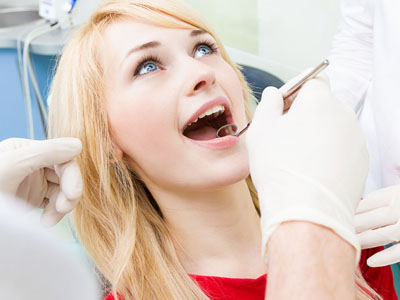
A man with his mouth open, wearing blue gloves, appears to be performing dental work on himself, with a focus on his teeth and gums.

Oral Exams

At the office of Lutz Dental, we believe a great smile begins with regular, thoughtful attention. Oral exams are more than a quick look in the mirror — they are a structured opportunity for our team to evaluate the health of your teeth, gums, bite, and surrounding tissues, catch early changes, and guide you toward care that keeps your smile comfortable and resilient. With a focus on prevention and clear communication, our exams are designed to inform and empower every member of your family.

Our approach combines careful clinical inspection, proven screening methods, and modern diagnostic tools so that nothing important is missed. During an oral exam you’ll receive personalized attention: we listen to your concerns, review your health history, and explain findings in straightforward terms so you understand your options and next steps.

What to Expect During a Comprehensive Oral Exam

Your appointment begins with a short conversation about medical conditions, medications, and any dental symptoms you’ve noticed — sensitivity, soreness, changes in bite, or persistent irritation. Knowing your full health picture helps us interpret what we see in your mouth and tailor the exam to your needs. We also note lifestyle factors such as diet or tobacco use that can influence oral health.

The hands-on portion of the exam inspects teeth, gums, tongue, and the soft tissues of the mouth, along with an assessment of your bite and jaw joints. Our clinicians check for early signs of decay, gum inflammation, abnormal wear patterns from clenching or grinding, and any suspicious lesions that may warrant closer attention. If you experience jaw pain or clicking, we evaluate temporomandibular joint function and discuss strategies to reduce discomfort.

When appropriate, we will recommend digital imaging to reveal problems not visible to the naked eye. After collecting findings from the visual exam and any diagnostic images, we’ll review what we discovered, explain why a follow-up or treatment might be recommended, and answer your questions so you can make informed choices about your care.

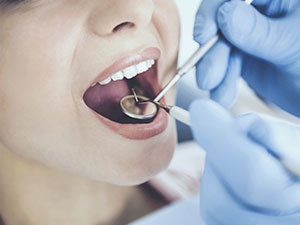
A woman receiving dental care with a focus on her open mouth and the dental tools being used.

How Oral Exams Help Protect Overall Health

Oral health and general health are closely connected. Certain medical conditions can show early signs in the mouth, and chronic dental infections or gum disease can influence other parts of the body. During an exam we look for patterns — persistent inflammation, unexplained oral sores, or unusual changes — that may suggest the need for medical follow-up or coordinated care with your physician.

Screening for oral cancer is a routine part of every comprehensive exam. We carefully inspect the lips, tongue, floor of the mouth, cheeks, and throat for any areas of concern and discuss symptoms that merit prompt attention. Early detection of abnormal tissue greatly improves the ability to address problems effectively.

We also monitor how medications and systemic conditions affect oral tissues. Dry mouth, for example, can increase the risk of cavities and is often linked to prescription drugs or medical conditions; recognizing this during an exam allows us to recommend protective measures to reduce future problems and preserve oral comfort.

Preventive Cleanings: More Than Just a Fresh Feel

A professional cleaning is an essential complement to the oral exam. Even with excellent home care, plaque and mineralized deposits can accumulate in places that are hard to reach with a toothbrush or floss. Our hygienists remove those deposits, polish surfaces, and help reduce the bacterial load that contributes to cavities and periodontal disease.

Beyond removing buildup, these visits are opportunities to reinforce effective home-care routines. We provide practical demonstrations on brushing and interdental cleaning tailored to your mouth — whether you use floss, interdental brushes, or water flossers — and offer targeted advice for problem areas like areas around restorations or tight spaces between teeth.

For children, regular checkups and cleanings establish healthy habits early and allow us to monitor growth and development. For adults, routine preventive care helps catch small problems before they become complex. In short, preventative visits protect function and help your smile feel and look its best over time.

Modern Imaging: Seeing Beneath the Surface

Diagnostic imaging complements the visual exam by revealing what’s happening inside teeth and below the gumline. Digital x-rays provide crisp images with minimal radiation exposure, letting us detect decay between teeth, assess root and bone health, and identify developing issues that haven’t yet caused symptoms.

Because images are acquired instantly and stored electronically, they help us educate patients on their condition by showing findings on-screen and illustrating why a particular approach to care is recommended. Digital records also make it easier to monitor changes over time and coordinate care if referrals are needed.

For certain situations, three-dimensional imaging like cone-beam computed tomography (CBCT) can offer added clarity. CBCT scans are especially helpful for planning surgical procedures, evaluating complex anatomy, and assessing implant sites — tools that lead to safer, more predictable treatment outcomes when advanced diagnostics are required.

A woman lying on a dental chair with a mirror over her face, receiving a dental examination by a dentist wearing gloves.

Choosing the Right Type of X-Ray for Your Needs

Not every visit requires the same images. Bitewing x-rays are commonly used to check for decay between teeth and to monitor bone levels near the crowns of back teeth, while periapical images focus on the entire length of an individual tooth to evaluate root health and the surrounding bone.

When a more complete view is needed, a full-mouth series combines multiple periapical and bitewing images to give a comprehensive picture of all teeth. Panoramic films offer a broad two-dimensional image of the jaws and tooth positions and are useful for reviewing developing teeth, impacted teeth, or an overall assessment of jaw health and symmetry.

Cephalometric films are used primarily in orthodontic planning when a profile view of the head and jaws helps evaluate growth and skeletal relationships. For highly detailed planning — such as implant placement or complex surgical cases — CBCT provides three-dimensional information that supports precise diagnosis and treatment planning.

The image depicts a dental setting with a smiling man seated in a dental chair, holding a pink object that appears to be an oral hygiene tool, while being attended to by a dental professional who is standing behind him and wearing blue gloves.

Regular oral exams are the foundation of lasting dental health. By combining a careful clinical inspection, preventive cleanings, appropriate imaging, and clear explanations, our practice helps patients avoid surprises and preserve healthy, comfortable smiles. If you have questions about what an exam entails or whether it’s time for your next visit, please contact us for more information.

Frequently Asked Questions

Are you accepting new patients?

+

Yes. We always welcome new patients and their families for care. Feel free to give us a call or reach out to us online to schedule a first visit or for any additional information on our office. We look forward to hearing from you!

How often do I need to get a dental checkup?

+

Routine dental checkups and professional cleanings help ensure your smile remains in tip-top condition and that any developing problems receive the prompt care they require. While it's a good idea to schedule a checkup and cleaning twice a year, longer or shorter intervals between routine visits depend on your specific needs.

What if I haven't been to the dentist in a long time?

+

We understand that life gets complicated and busy, and for various reasons, you haven't been able to get to the dentist for care. Don't worry; it's always a good time to get back in touch with the health of your smile.

At Lutz Dental, we offer skilled and compassionate care to address a wide range of dental needs. Whether you need a simple checkup and cleaning, restorations, periodontal treatment, root canal therapy, or the replacement of missing teeth to get your smile back into shape, we provide precise, gentle, stress-free treatment to give you a smile that is as beautiful as it is healthy.

Give us a call today; we're happy to address all your questions and concerns about getting your smile back in tip-top condition.

Should pregnant women get a dental checkup?

+

For pregnant women, practicing good oral care and seeing the dentist to maintain a healthy smile is considered an important component of prenatal care. Researchers have found that pregnancy not only increases the risk of oral health problems, but these problems may also lead to pregnancy complications. At the office of Lutz Dental, we provide the skilled and compassionate care required to help expectant mothers keep their teeth and gums in tip-top condition. While certain procedures are not recommended during pregnancy, we provide the necessary care and take all the necessary precautions required.

How can I improve the appearance of my smile?

+

Thanks to advances in modern dentistry, teeth that have been affected by a range of imperfections or that have sustained damage from trauma or dental decay can be restored to produce a naturally beautiful looking and functional smile.

As skilled and experienced providers of care, our office can effectively improve and enhance the appearance of teeth that are stained, discolored, misshapen, chipped, fractured, gapped, crowded, or broken down due to dental decay. At the office of Lutz Dental, we offer a comprehensive selection of the leading-edge cosmetic solutions from teeth whitening procedures, dental bonding, tooth-colored fillings, and veneers, to prosthetic solutions and dental implants to rebuild complete and beautiful smiles.

Contact our office to learn more about the many ways we can help you create the smile you've always wanted.

How should I prepare for my dental appointment?

+

If you're visiting Lutz Dental for the first time, it is helpful that you contact your former dental office and have your records sent over to us. Make note of any problems you may have so that you can discuss them with your dentist.

To provide efficient service, we ask you to please bring your insurance card, an ID, plus any referral slips or diagnostic records given to you by another office. If you are taking medications, please note or make a list of what they are as you will need to provide that information.

Does Lutz Dental treat patients of all ages?

+

Yes! We assure you that both you and your family will be in good hands at the office of Lutz Dental.

What if I'm anxious about seeing the dentist?

+

We do our best to make sure every patient who steps into our office for care is put at ease. We provide precise and gentle care and our skilled, compassionate team strives to make every visit stress-free. You can rest assured that your smile is in the best of hands and that we are doing all we can to ensure your comfort throughout every procedure. While we always take the time to explain every step in care, feel free to ask us any questions about local anesthesia and methods of dental sedation.

How much does dental treatment cost?

+

At the office of Lutz Dental, we strive to provide the highest quality of care to address all your dental needs. Once we've had the opportunity to examine your smile, we can give you a clear picture of any dental issues that are present, along with a quote for what the cost of treatment will be. The cost of care all depends upon the extent and complexity of issues affecting the health or appearance of your smile and the types of procedures that are required. Our goal is to make dental care more affordable so that you can begin treatment without any additional stress or delay.

Keep in mind that with routine dental checkups and periodic care, we can help prevent dental disease while treating emerging problems early in their onset to avoid larger issues and more expensive care down the road.

What if I have dental insurance?

+

Routine dental checkups and preventive care procedures may be covered under your dental insurance plan requiring little to no out-of-pocket expense. We invite you to check our financial information page or give us a call to find out if our office participates with your plan, and if you have any other questions about dental insurance, dental savings plans, forms of payment, or financing options. We welcome your inquiries and do our best to help you begin care without additional stress or delay.

What is the best method of replacing missing teeth?

+

If you've lost a tooth due to injury, decay, gum disease, or any other reason, we recommend dental implants to replace missing teeth. Dental implants come the closest to replicating the look, feel, and function of your natural teeth.

Is flossing as important as brushing?

+

Absolutely! Both flossing and brushing regularly are equally important to maintain your oral health. While brushing cleans the surface of your teeth, flossing cleans in between them. Flossing is important to prevent plaque buildup, which can cause gums to recede and lead to periodontal disease.

Do you still need to see a dentist if you have dentures?

+

Even if you have dentures, it is still necessary to see a dentist! Dental checkups help ensure that your dentures are comfortable, fitting properly, and that there are no other problems. Beyond assessing your dentures, our dentist will also perform a thorough examination of the jawbone, and surrounding soft tissues both inside the mouth, the face, and neck, to confirm that you remain in good oral health.

What should I do if I have a dental emergency?

+

Emergency dental care is a service we hope you'll never need- but if you do, the office of Lutz Dental is here for you!

Whether you're suffering from a chipped tooth, toothache, or any problem affecting your oral health, you can be sure to get the prompt attention and compassionate care you require at our office. Patient care and comfort are our top priorities, and we offer a comprehensive range of the most advanced services to address a broad spectrum of dental needs.

While the pain of a toothache is one of the more common reasons that patients come to our office for emergency dental care, we also promptly treat emergencies that are not necessarily painful like crowns that have been dislodged and broken dentures that leave embarrassing gaps in one's smile.

You can rest assured that your oral health is in the best of hands at our office. We'll quickly determine exactly what's wrong, explain your treatment options, and then provide the precise and gentle care you require to alleviate your discomfort and get you back on the path to oral health and wellness.

Your health and comfort are our top priorities. If your dental emergency is painful, if it affects the appearance of your smile, or if you suspect that an infection is present, our office will make every effort to see you as soon as possible for care.

Why choose the office of Lutz Dental?

+

At the office of Lutz Dental, we welcome patients of all ages for care and offer a comprehensive range of services designed to help every member of your family maintain a beautiful and healthy smile. Whether you or a loved one needs a routine checkup and cleaning, fillings, same-day crowns, a cosmetic smile makeover, the replacement of missing teeth or require the services of a skilled and compassionate emergency dentist, you can rely on our office for the highest quality care.

For more information on our office and the many services we provide, or to schedule an appointment for care, give us a call today.

What is a comprehensive oral exam and why is it important?

+

A comprehensive oral exam is a systematic evaluation of your teeth, gums, bite, and the soft tissues of the mouth performed by a dental clinician. The goal is to identify early signs of decay, gum disease, abnormal wear, infection, or other conditions so that treatment can be more effective and conservative. At Lutz Dental we emphasize prevention and education so patients understand their oral health and options.

During this exam the clinician integrates a visual inspection with a review of your medical history and any symptoms you report, which helps tailor recommendations to your needs. The process reduces the likelihood of unexpected problems by catching issues when they are easier to treat and by guiding appropriate preventive care.

What should I expect during my oral exam?

+

Your appointment typically begins with a short review of your medical history, medications, and any dental concerns such as sensitivity or changes in bite. The hands-on exam includes inspection of the teeth, gums, tongue, cheeks, and the temporomandibular joints, and the clinician will note signs of inflammation, abnormal wear, or suspicious lesions. If bite or jaw problems are present, the exam will include an assessment of how your teeth come together and how your jaw moves.

When indicated, the clinician may recommend digital imaging to see areas not visible to the eye and to evaluate root and bone health. After gathering findings, the dentist will explain what was observed, answer your questions, and outline recommended next steps in clear, straightforward terms.

How often should I schedule an oral exam?

+

For most patients, a comprehensive exam and professional cleaning every six months is a good baseline to maintain oral health and catch early changes. Patients with a history of gum disease, frequent cavities, or systemic conditions such as diabetes may require more frequent visits, often every three to four months, based on their individual risk. Your dentist will recommend a schedule that reflects your oral condition, medical history, and daily habits.

Regular visits allow clinicians to monitor trends over time, adjust preventive strategies, and intervene before small problems become more complex. Consistent care also supports long-term function and comfort, helping you preserve your natural teeth and oral health.

How do oral exams detect early signs of disease, including oral cancer?

+

Oral exams include a careful visual and tactile inspection of the lips, tongue, floor of the mouth, cheeks, throat, and surrounding tissues to identify persistent sores, discolored patches, lumps, or other abnormalities. Clinicians are trained to recognize features that warrant closer observation or immediate referral, and routine screening for oral cancer is an established part of every comprehensive exam. Early detection greatly improves the options and outcomes for treatment.

When suspicious findings are present, the dentist may document the area, recommend periodic rechecks, or refer you for specialized evaluation and biopsy if needed. Open communication about symptoms such as persistent pain, bleeding, or difficulty swallowing helps the team prioritize timely follow-up.

What role do digital x-rays and CBCT scans play in an oral exam?

+

Digital x-rays are a standard complement to the visual exam because they reveal decay between teeth, bone levels around roots, and other issues not visible on the surface. These images are captured quickly, use low radiation exposure, and are stored electronically to track changes over time and to help explain findings to patients. For routine assessments, bitewing and periapical images are commonly used to evaluate specific areas of concern.

For complex cases such as implant planning, impacted teeth, or when three-dimensional detail is needed, cone-beam computed tomography (CBCT) provides a precise view of anatomy and bone structure. The clinician will recommend the most appropriate imaging based on your symptoms, exam findings, and diagnostic needs to ensure accurate diagnosis and safe treatment planning.

How do oral exams help protect overall health?

+

Oral health and general health are closely connected, and conditions in the mouth can reflect or influence systemic issues such as diabetes, heart disease, and nutritional deficiencies. During an oral exam clinicians look for patterns like persistent inflammation, recurrent infections, or oral tissue changes that may indicate a need for medical evaluation or coordinated care with your physician. Identifying these signs early supports better overall health management.

The exam also addresses medication effects and lifestyle factors that impact oral tissues, such as dry mouth from prescriptions or tobacco use, and offers targeted recommendations to reduce risk. By treating oral problems proactively and communicating with other healthcare providers when necessary, dental care contributes to broader health and well-being.

What information should I share with the dentist before my oral exam?

+

Providing a complete medical history, a current list of medications and supplements, and information about recent hospitalizations or medical diagnoses helps the dentist interpret oral findings accurately and plan safe care. Be sure to mention allergies, pregnancy, bleeding disorders, or any implants or devices such as pacemakers that may affect treatment choices. Honest disclosure about tobacco, alcohol, or recreational drug use also helps the clinician assess risk and provide tailored guidance.

If you experience specific symptoms like persistent pain, sensitivity, dry mouth, or changes in taste or swallowing, describe these clearly during the appointment so they can be addressed directly. Sharing your oral hygiene routine and any challenges you face at home allows the team to offer practical, personalized advice for daily care.

How do preventive cleanings work with oral exams to maintain oral health?

+

Preventive cleanings performed by a hygienist remove plaque and hardened deposits that are difficult to eliminate with home brushing and flossing alone, which reduces the bacterial burden that contributes to cavities and periodontal disease. These appointments often accompany the oral exam, allowing the clinician to evaluate soft tissues and teeth immediately after cleaning when surfaces are exposed and easier to examine. Cleanings also include polishing and fluoride or sealant recommendations when appropriate to support long-term protection.

Hygienists take the opportunity to reinforce home-care techniques and demonstrate effective brushing and interdental cleaning tailored to your mouth, including guidance on tools like floss, interdental brushes, or water flossers. Regular preventive care is central to catching small problems early and preserving function, comfort, and appearance over time.

Are oral exams different for children than for adults?

+

While the fundamental components of an oral exam are similar across ages, exams for children place greater emphasis on growth and development, eruption patterns, and early habit assessment to prevent future problems. Pediatric exams often include guidance for parents on teething, cavity prevention, fluoride use, and home-care routines, along with monitoring for orthodontic concerns such as crowding or bite issues. Establishing a routine of regular visits helps children build healthy habits and reduces anxiety about dental care.

For adolescents, clinicians may also screen for sports-related risks, wisdom tooth development, and the effects of orthodontic treatment, while adult exams focus more on periodontal health, restoration maintenance, and systemic factors that affect oral tissues. Each visit is adapted to the patient’s stage of life and individual needs.

When should I seek an unscheduled oral exam or emergency evaluation?

+

You should seek an unscheduled exam if you experience sudden severe tooth pain, swelling, uncontrolled bleeding, a broken or knocked-out tooth, or signs of infection such as fever or spreading facial swelling. These situations can indicate conditions that need prompt attention to relieve pain, prevent complications, and protect oral and systemic health. If you notice a rapidly changing or painful lesion, persistent numbness, or difficulty breathing or swallowing, seek immediate evaluation.

For less urgent but concerning changes—such as a sore that won’t heal over two weeks, new persistent sensitivity, or a restoration that feels loose—schedule an exam as soon as practical so the issue can be assessed before it progresses. Early evaluation often allows more conservative care and better outcomes.

Ready to Transform Your Smile?

Whether you need a routine checkup, a complete smile makeover, or have a dental emergency, the team at Lutz Dental is here to help. With over 32 years of experience serving the Lutz community, we make it easy to get the care you deserve. New patients are always welcome.

A Family Practice That Puts You First

At Lutz Dental, every patient is treated like a member of our family. We take the time to listen, answer your questions honestly, and create a treatment plan that works for your needs and your budget. Call us or book online — we are accepting new patients and would love to welcome you to our practice.

Office Hours

Monday
8:00 am - 5:00 pm
Tuesday
8:00 am - 5:00 pm
Wednesday
8:00 am - 5:00 pm
Thursday
8:00 am - 5:00 pm
Friday
8:00 am - 5:00 pm